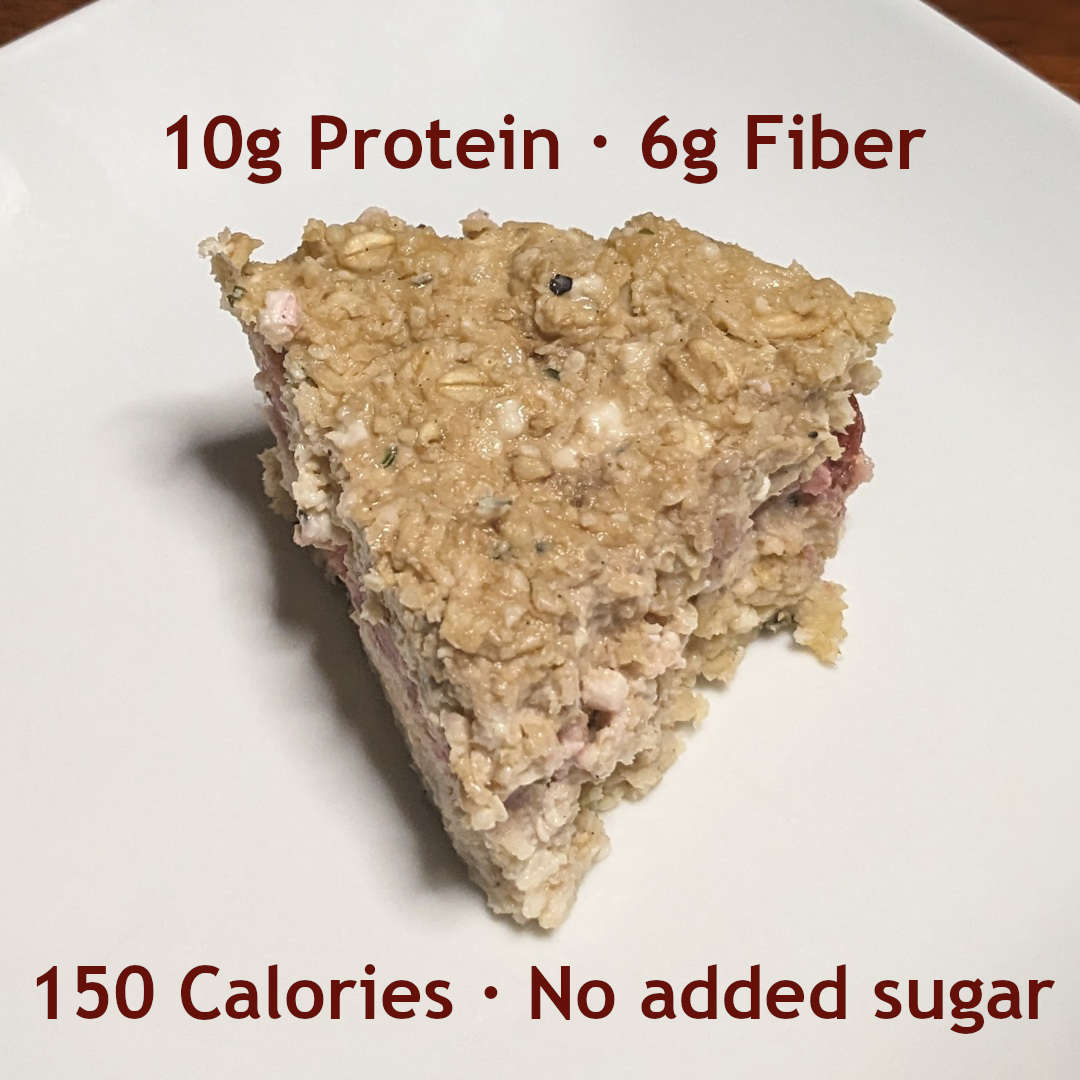
Baked oats are an ideal cold weather breakfast: warm, nutritious, budget-friendly, convenient, suitable for a wide range of dietary needs, delicious, and satisfying. With flavors reminiscent of oatmeal cookies, brownies, pumpkin pie and more, these recipes are a flavorful alternatives to traditional oats.
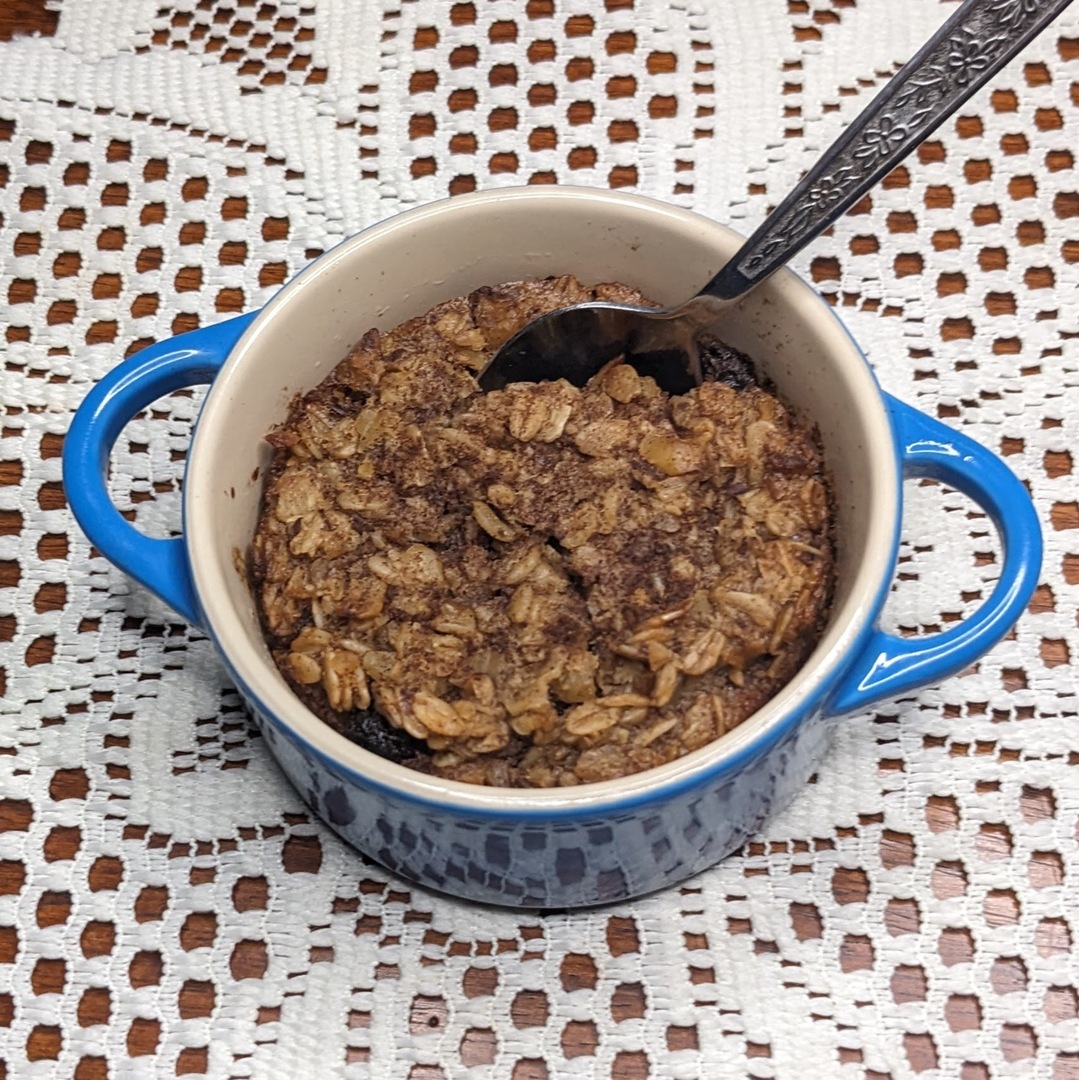
Nutritional Benefits of Oats
Oats are a nutrient-dense (gluten-free) whole grain that support heart health, digestion, and steady energy. They are rich in soluble fiber, especially beta-glucan, which helps lower LDL cholesterol and supports healthy blood sugar control. Oats also provide plant-based protein, iron, magnesium, and B vitamins that contribute to muscle function and efficient metabolism.
Perfect for Meal Prep
Baked oats take a bit longer to prepare than stovetop oatmeal, but they are ideal for making ahead. Prepare a big batch, eat some straight out of the oven and store the rest in the fridge. They can be eaten as snack bars straight from the fridge, or reheat in the microwave for a hot, fast, nourishing breakfast.
Construction
Oats are a big part of these recipes. Ranging from 35-40% by volume. They are naturally gluten-free, but not all rolled oats are gluten-free. If you are on a gluten-free diet, make sure that you purchase gluten-free oats. Oats are really flexible, they can be chewy, or creamy and their mild, nutty flavor make them a great foundation for a variety of flavors.
My recipes are inspired by some other food, like oatmeal cookies, brownies, or pumpkin pie.
Most baked oats are somewhat sweet, 20%-40% of the calories in these recipes comes from sugar. I’m sensitive to glycemic index, so I avoid added sugar. Instead I rely on fruits and vegetables to provide sweetness and complimentary flavors. This can be tricky, and takes some experimentation. I use dates frequently, I also use raisins, applesauce and sweet potatoes. Bananas, figs, and berries are other good sources of sweetness. Some spices such as cinnamon, and vanilla can also increase the impression of sweetness.
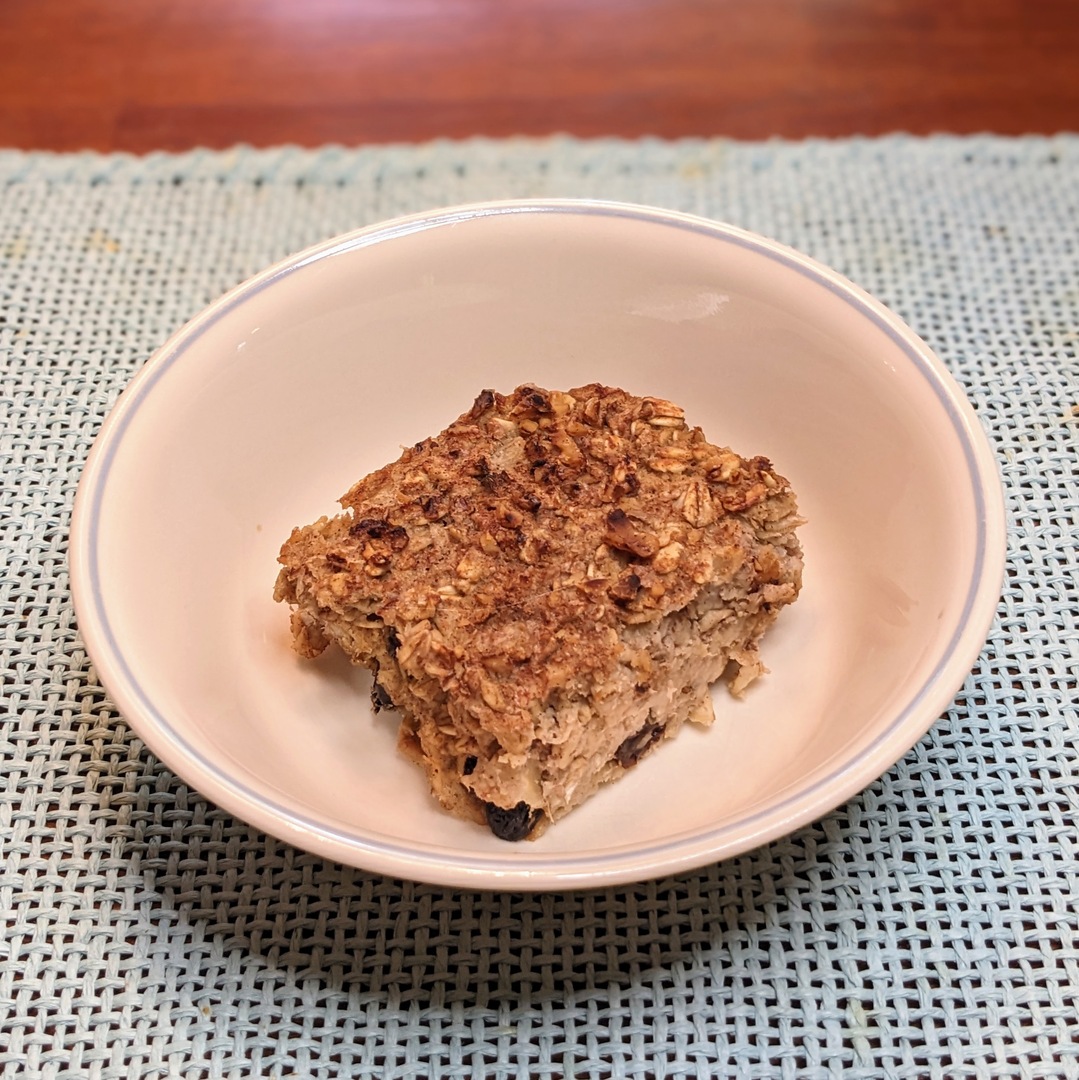
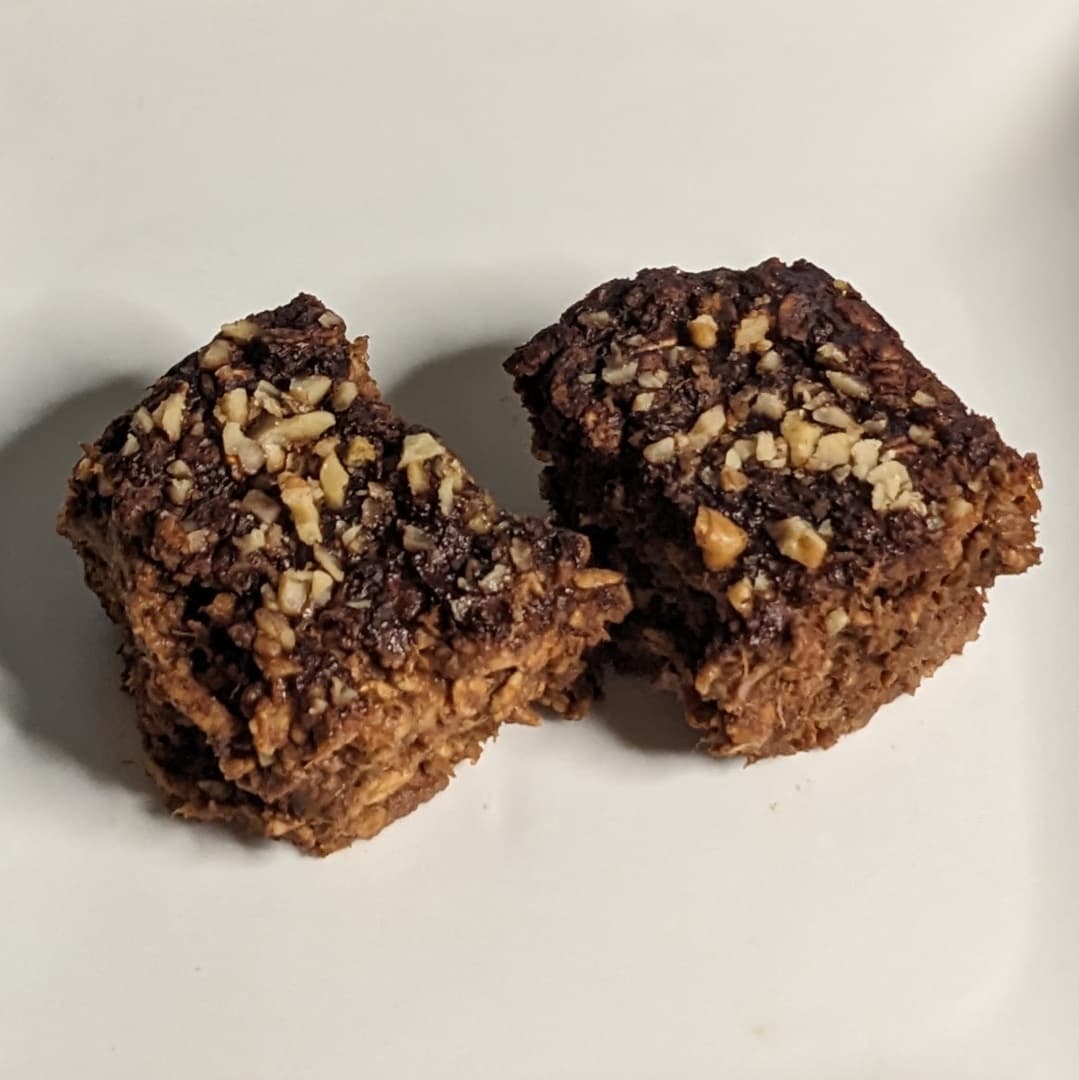
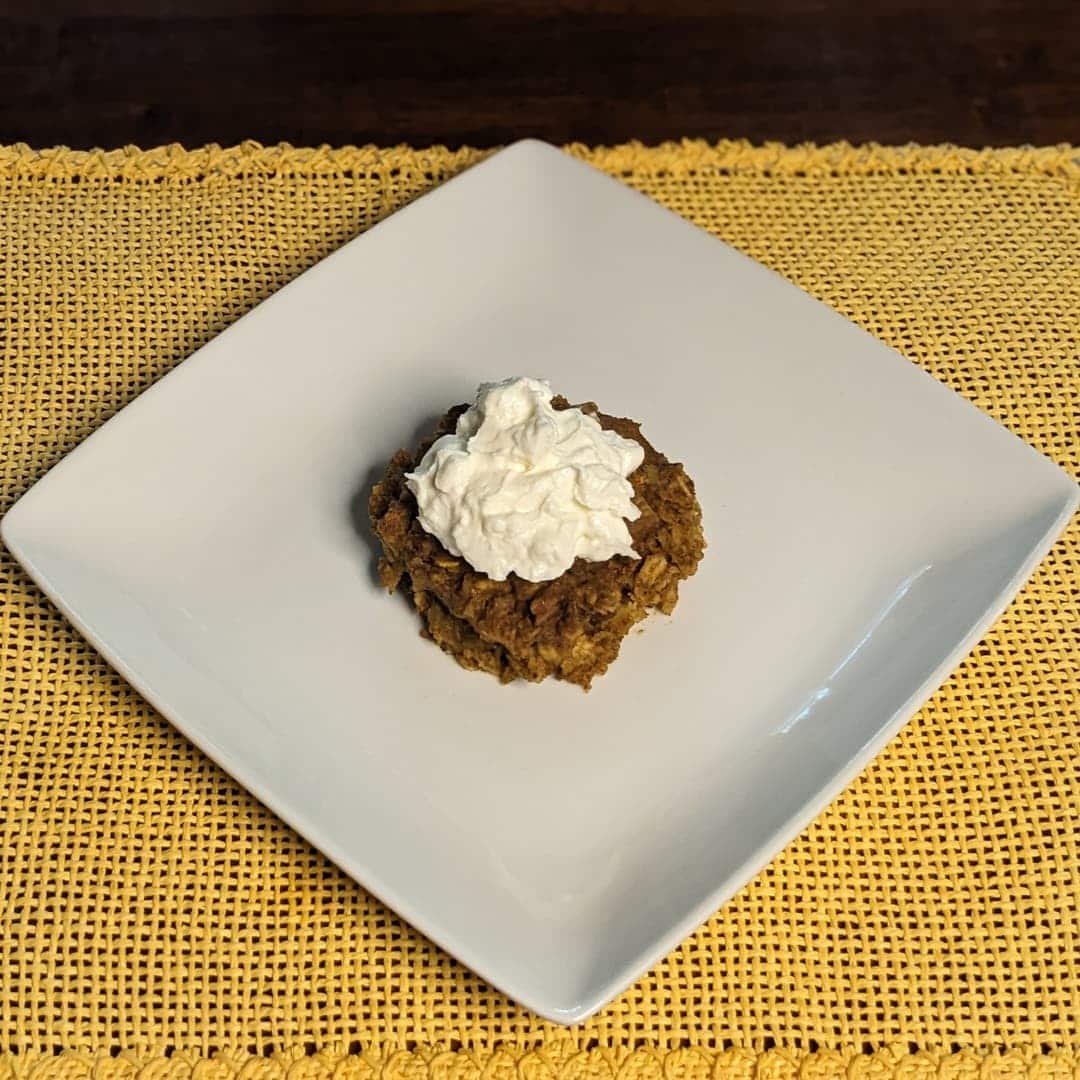
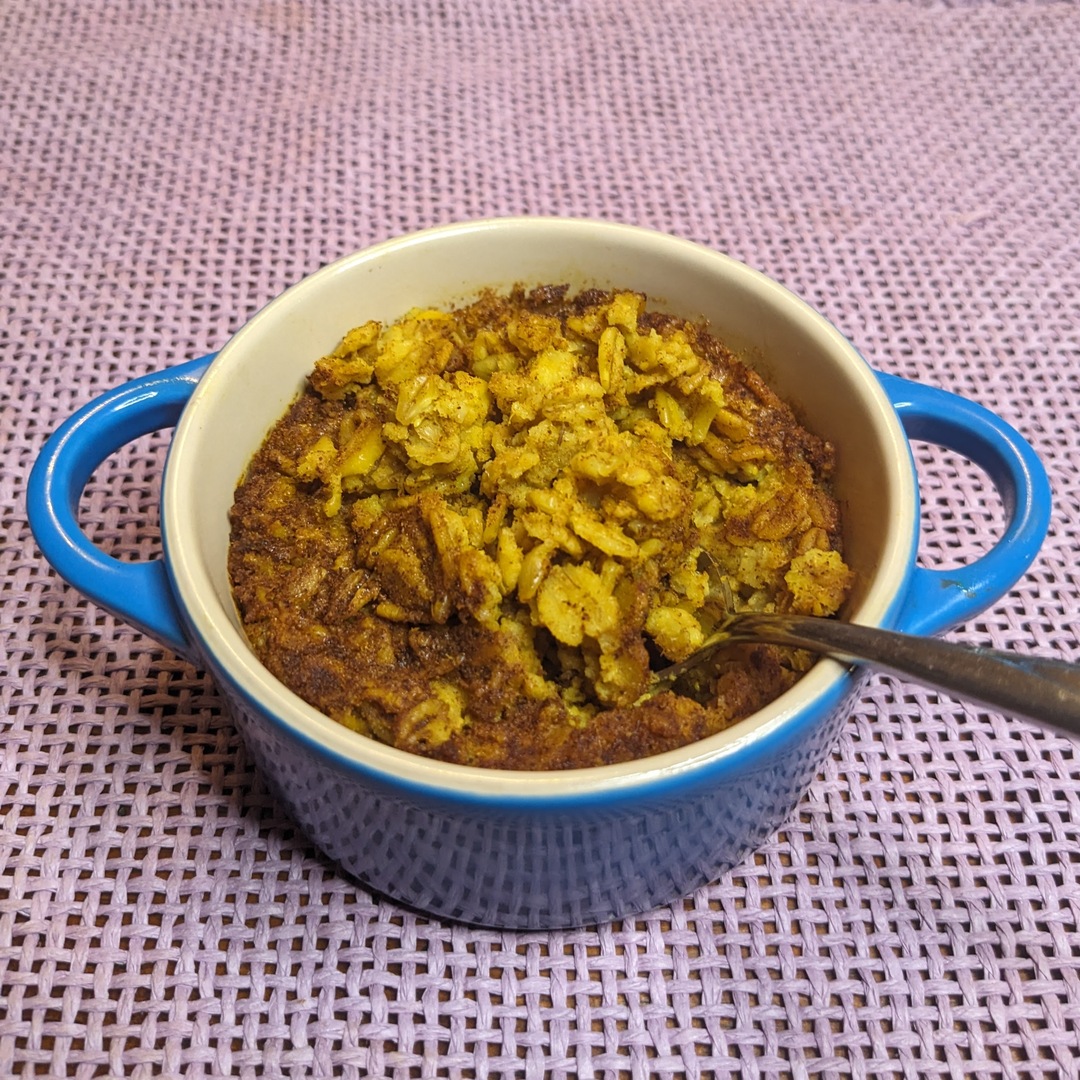
Texture plays a really important roll that you can control in a variety of ways. It can range from classic tender and chewy Baked Apple Raisin Oats, to gooey and fudgy Oatmeal Breakfast Brownie, to custardy Pumpkin Baked Oats, and creamy Golden Turmeric Baked Oats. Liquid-to-oat ratio and baking temperature are your primary dials for controlling texture. Higher liquid-to-oat ratio 2:1 and lower baking temperature 325℉ yield softer, creamier oats, and lower liquid-to-oat 1:1 and higher baking temperature 350℉ produce more chewy oats. Other factors, including: the brand of oats, mix-ins like pumpkin, sweet potatoes and dates, leavening agents (baking powder), and binders like eggs, psyllium husk powder, chia seeds, and flax seeds, can have a big effect on texture. Nuts and seeds can be included to provide a little crunchy contrast.